
Workflow
Give every campaign a consistent identity.
Use DATALYR tracking links and campaign parameters to preserve acquisition context across marketing activity. Build a naming convention your team can maintain and verify it through the landing journey.
Compare plans and usage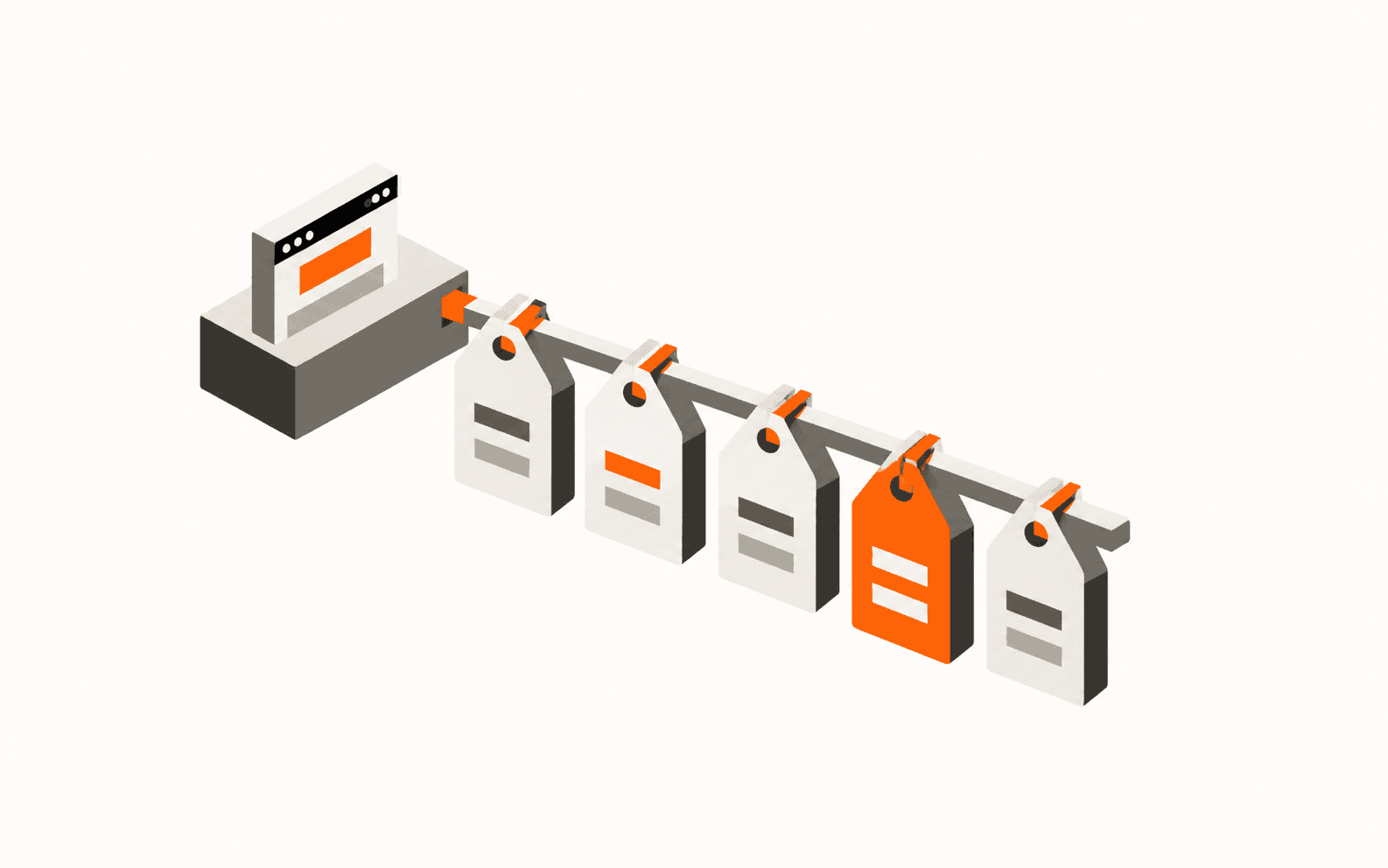
A naming convention only helps if it survives the click.
Campaign reporting becomes fragmented when the same source appears under several names or redirects drop the query string. DATALYR tracking links support a more deliberate acquisition workflow. Decide the taxonomy first, generate or configure the links, and test the actual destination before distributing them across paid, email, creator or partner campaigns.
In DATALYR
UTM tracking and campaign links
Keep names intentional
Agree how source, medium and campaign values are used. Stable values make it easier to group results without repeatedly cleaning one-off naming variations.
Preserve the destination context
Inspect the link through redirects and landing pages. A correct-looking URL is not sufficient if the final arrival loses the parameters your measurement depends on.
Connect the click to outcomes
Use captured campaign context with events and revenue. Keep a clear distinction between a campaign tag and a platform click identifier; they serve different purposes.
The workflow
From setup to a useful answer.
Write a compact taxonomy
Choose a small set of allowed source and medium values and a campaign naming rule. Share examples with everyone who creates links.
Create the tracking link
Use the destination and campaign context intended for the placement. Avoid putting personal or sensitive information into public URL parameters.
Test the full path
Open the link in the relevant environment and inspect the recorded visit. Confirm the final destination and campaign values before the link goes into a live campaign.
Verify the result
Know what good looks like.
- The final landing URL preserves the intended campaign context.
- Values follow the agreed spelling and naming convention.
- No personal or sensitive information appears in URL parameters.
Go deeper
Use the guide for context, then follow the implementation reference for your setup.
A few practical questions.
Do UTMs identify a person?
Campaign parameters describe acquisition context. They are not a substitute for a stable user identifier, and they should not contain personal data.
Should I replace platform click IDs with UTMs?
No. Where available and permitted, retain the relevant click identifier alongside campaign context. Follow the destination platform’s setup requirements rather than treating the two as interchangeable.
Explore related workflows.
- First-party tracking software ↗
Capture website activity on a domain you control, then connect known visitors to the conversions and revenue in DATALYR.
- Ad analytics software ↗
Review ad spend, campaign performance and attributed revenue in DATALYR. Keep platform-reported conversions distinct from first-party outcomes.
- Lead Generation Attribution ↗
Connect lead sources, booked calls and downstream outcomes with DATALYR. Separate pipeline value from collected revenue and evaluate acquisition quality.